Food waste is one of the most persistent profit killers in the restaurant industry. We believe that every establishment has the potential to dramatically reduce waste and improve margins, without overhauling their entire operation. The key lies in mastering inventory management.
According to industry estimates, restaurants throw away between 4% and 10% of the food they purchase before it ever reaches a guest's plate. That's money walking straight out the back door and into the dumpster. In 2026, with ingredient costs continuing to climb and margins tighter than ever, getting inventory under control isn't optional, it's essential for survival.
The good news? You don't need a massive budget or a team of data scientists. You need five proven steps, consistently applied. Let's break them down.
Step 1: Implement the FIFO Method
FIFO stands for First-In, First-Out, and it's the foundation of smart inventory management. The concept is simple: older stock gets used before newer stock arrives. This minimizes spoilage and ensures your ingredients are always at peak freshness.
Here's how to make FIFO work in your kitchen:
- Label everything. Every delivery should be dated the moment it arrives. Use color-coded labels or day-of-the-week stickers to make identification instant.
- Organize strategically. New items go behind older ones on shelves and in coolers. Train your team to pull from the front, not the back.
- Make it non-negotiable. FIFO only works when everyone follows it. Build it into your training and hold staff accountable.
This approach is especially critical for perishables like produce, dairy, and proteins, the items most likely to spoil and cost you money. We've seen restaurants cut their spoilage losses by 20% or more simply by enforcing consistent FIFO practices.
Step 2: Conduct Regular Inventory Counts
You can't manage what you don't measure. Regular inventory counts give you visibility into what's actually on your shelves versus what your systems say should be there.
We believe that successful inventory management requires a two-tier counting approach:
Daily spot checks for high-value and high-turnover items. Think proteins, seafood, avocados, specialty cheeses, anything expensive or prone to theft and waste. These quick counts take just a few minutes but catch problems before they spiral.
Weekly full counts for your entire inventory. Yes, it takes time. But this practice prevents overstocking, identifies slow-moving items that are tying up cash, and keeps your purchasing decisions grounded in reality.
Assign dedicated staff members to handle counts. Rotating this responsibility can help build accountability and catch discrepancies that might slip past a single person. Track your count history over time to identify patterns: both in your inventory and in your team's reliability.
If your cost analysis isn't delivering the insights you need, inconsistent inventory counting is often the culprit. For more on diagnosing those issues, check out our guide on why your restaurant cost analysis isn't working.
Step 3: Set Par Levels for All Ingredients
Par levels represent the minimum amount of each ingredient you should have on hand at any given time. Think of them as your inventory guardrails: they tell you when to reorder and how much.
Without par levels, purchasing becomes guesswork. You either over-order (leading to waste and tied-up capital) or under-order (leading to 86'd menu items and frustrated guests). Neither scenario is good for your bottom line or your reputation.
To establish effective par levels:
- Analyze your sales data. Look at historical usage for each ingredient across different day-parts and days of the week.
- Factor in lead times. How long does it take for an order to arrive? Your par level needs to account for that gap.
- Build in a buffer. A small safety stock protects against unexpected rushes or delivery delays.
- Review and adjust regularly. Seasonality, menu changes, and shifting customer preferences all impact usage. Par levels should evolve with your business.

When par levels are dialed in, your ordering process becomes systematic rather than reactive. Your team knows exactly when to place orders and how much to request, reducing both waste and stockouts.
Step 4: Invest in Inventory Management Software
Manual spreadsheets and clipboard counts served the industry for decades. In 2026, they're holding you back.
Modern inventory management software offers capabilities that simply aren't possible with manual systems:
- Real-time stock tracking across multiple locations
- Automated reorder alerts when items hit par levels
- Expiry date monitoring to flag items before they spoil
- POS integration that automatically deducts sold items from inventory
- Consumption trend analysis to anticipate demand and adjust purchasing
We believe that technology should simplify operations, not complicate them. The right software reduces human error, provides accurate reporting for smarter purchasing decisions, and frees up your management team to focus on hospitality rather than paperwork.
The initial investment pays for itself quickly. Most operators see ROI within 90 days through reduced waste, better purchasing, and tighter cost control. For more on how consulting and operational improvements generate rapid returns, see our breakdown on how hospitality consulting pays for itself.
If you're also exploring how AI can support your operations beyond inventory, our recent post on integrating AI with restaurant operations offers a practical roadmap.

Step 5: Organize, Label, and Standardize Portions
The final step ties everything together. Even perfect FIFO, meticulous counts, and sophisticated software can't save you if your storage is chaotic and your portions are inconsistent.
Storage Organization
A well-organized storage system supports every other inventory practice:
- Categorize clearly. Separate perishables from non-perishables. Group items by type and usage frequency.
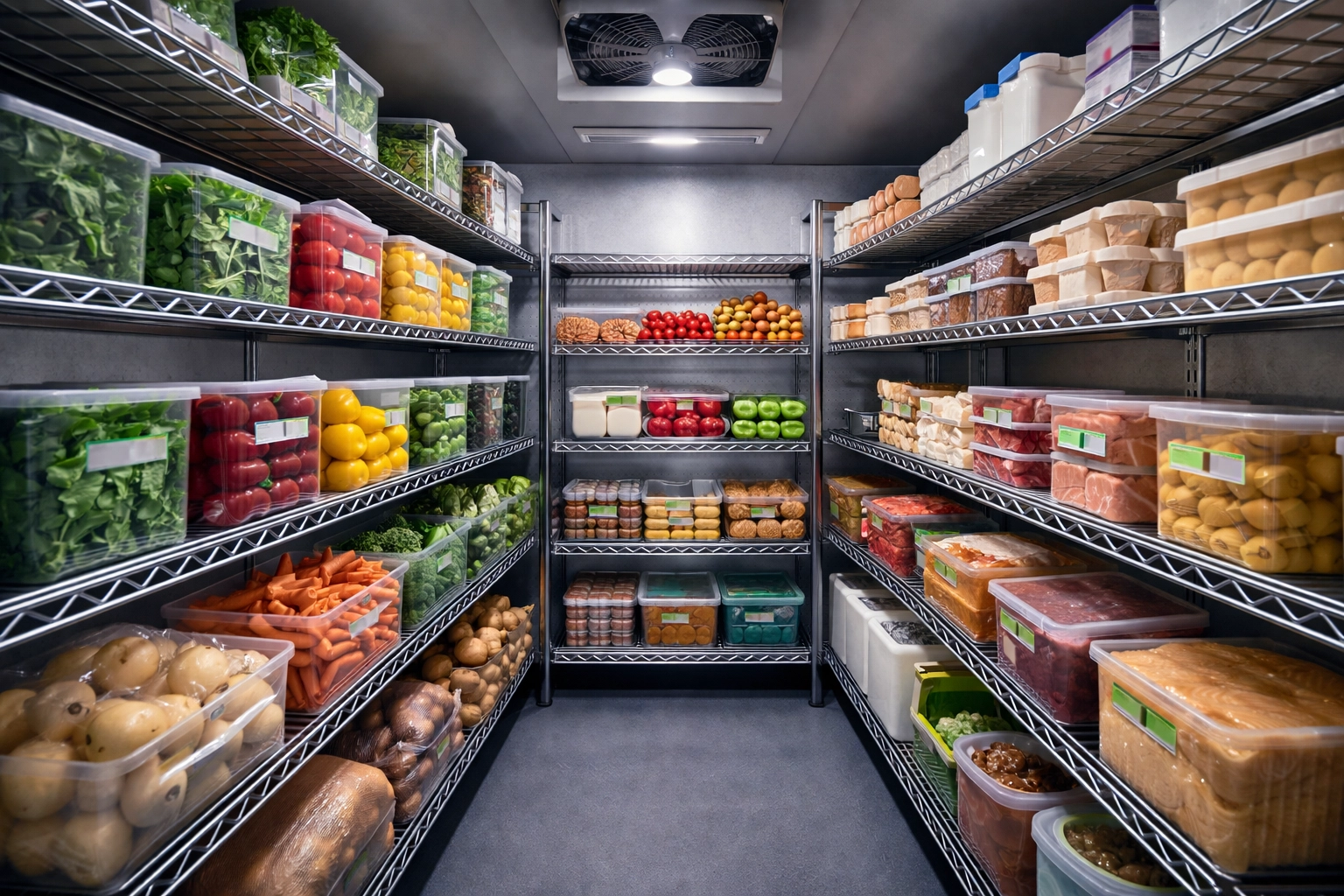
- Use clear containers. Transparent bins let staff see contents at a glance, reducing the chance that items get lost and forgotten.
- Maintain proper temperatures. Monitor cooler and freezer temps religiously. A few degrees of drift can accelerate spoilage across your entire cold storage.
- Label everything. Beyond FIFO dates, include item names and quantities. If someone can't identify what's in a container, it often ends up in the trash.
Portion Standardization
Inconsistent portions are a silent margin killer. When one cook "eyeballs" a 6-ounce protein and another measures precisely, you're bleeding money on every plate.
Establish standard recipes with exact measurements for every ingredient. Train your kitchen staff to use scales, measured scoops, and portion-controlled containers rather than estimating. This consistency prevents over-portioning: which adds up fast in high-volume kitchens: and ensures guests receive the same experience every visit.
Portion control also feeds directly into your cost analysis. When you know exactly how much of each ingredient goes into each dish, you can accurately calculate food costs and price your menu for profitability. Our guide on menu design that drives profit dives deeper into that connection.
Putting It All Together
These five steps work as a system. FIFO keeps ingredients fresh. Regular counts provide visibility. Par levels guide purchasing. Software automates and analyzes. Organization and standardization ensure consistency at the point of execution.
Implemented together, they create a virtuous cycle: less waste means lower food costs, which means healthier margins, which means more resources to invest in your team, your menu, and your guest experience.
We believe that every restaurant has the potential to cut food waste significantly: often by 15% to 25%: within the first few months of implementing these practices. The key is consistency. These aren't one-time projects; they're ongoing disciplines that become part of your operational culture.
If you're struggling with where to start or how to train your team on these systems, we can help. Years of experience in hospitality consulting have shown us that the restaurants that master inventory management don't just survive tight markets: they thrive in them.
Your inventory is either working for you or against you. In 2026, make sure it's working for you.