We believe that every restaurant has the potential to achieve stronger profit margins: without cutting corners on quality or guest experience. The secret? A disciplined approach to inventory management that transforms how you track, order, and utilize every ingredient that comes through your back door.
If you've ever watched profits slip away due to spoilage, inconsistent portions, or surprise shortages, you're not alone. These challenges plague establishments of all sizes, from neighborhood bistros to multi-location chains. The good news is that a proven framework exists to address these issues systematically.
In this guide, we're breaking down the five-pillar inventory management framework that hospitality professionals rely on to minimize waste, optimize cost of goods sold (COGS), and build tracking systems that actually work.
Why Inventory Management Is the Foundation of Cost Control
Before diving into the framework, let's address a fundamental truth: inventory serves as the common denominator across all cost control strategies. Your food costs, labor efficiency, menu pricing, and even customer satisfaction all connect back to how well you manage what's in your walk-in cooler and dry storage.
Poor inventory practices create a domino effect. Over-ordering leads to spoilage. Under-ordering causes 86'd menu items and disappointed guests. Inconsistent tracking means you're essentially flying blind when making purchasing decisions.
The framework we're about to share addresses each of these pain points through five interconnected pillars. When implemented together, they create a system that reduces human error, prevents excess ordering, aligns purchases with actual demand, and frees your management team to focus on higher-value decisions.
Pillar One: Optimize Inventory Levels to Reduce Waste
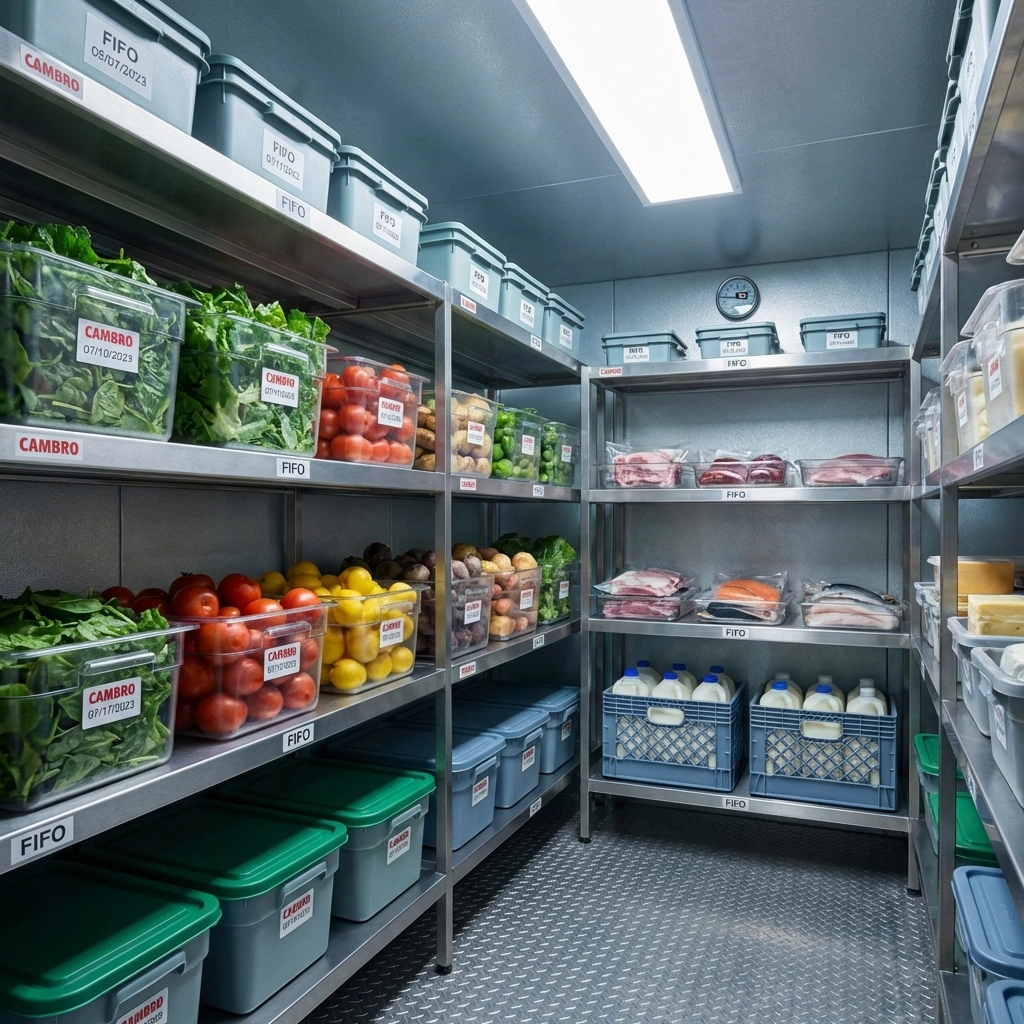
Maintaining the right balance between stock availability and preventing spoilage is where effective inventory management begins. Too much inventory ties up capital and increases waste. Too little leaves you scrambling during service.
Practical steps to implement:
-
Adjust inventory for demand fluctuations. Increase stock levels before predictable busy periods (holidays, local events, weekends) while scaling back during slower days. Your historical sales data should guide these decisions.
-
Set smart reorder points. Rather than waiting until you're nearly out of an ingredient, establish automated reorder triggers based on typical usage patterns. Most modern inventory software can handle this automatically.
-
Review par levels monthly. What worked in January won't necessarily work in July. Seasonal menu changes, ingredient availability, and shifting customer preferences all require regular par level adjustments.
-
Implement real-time inventory tracking. Manual spreadsheets can't keep pace with a busy kitchen. Software that integrates with your POS system provides visibility into what's actually being used: not just what you think is being used.
Pillar Two: Portion Control and Recipe Standardization
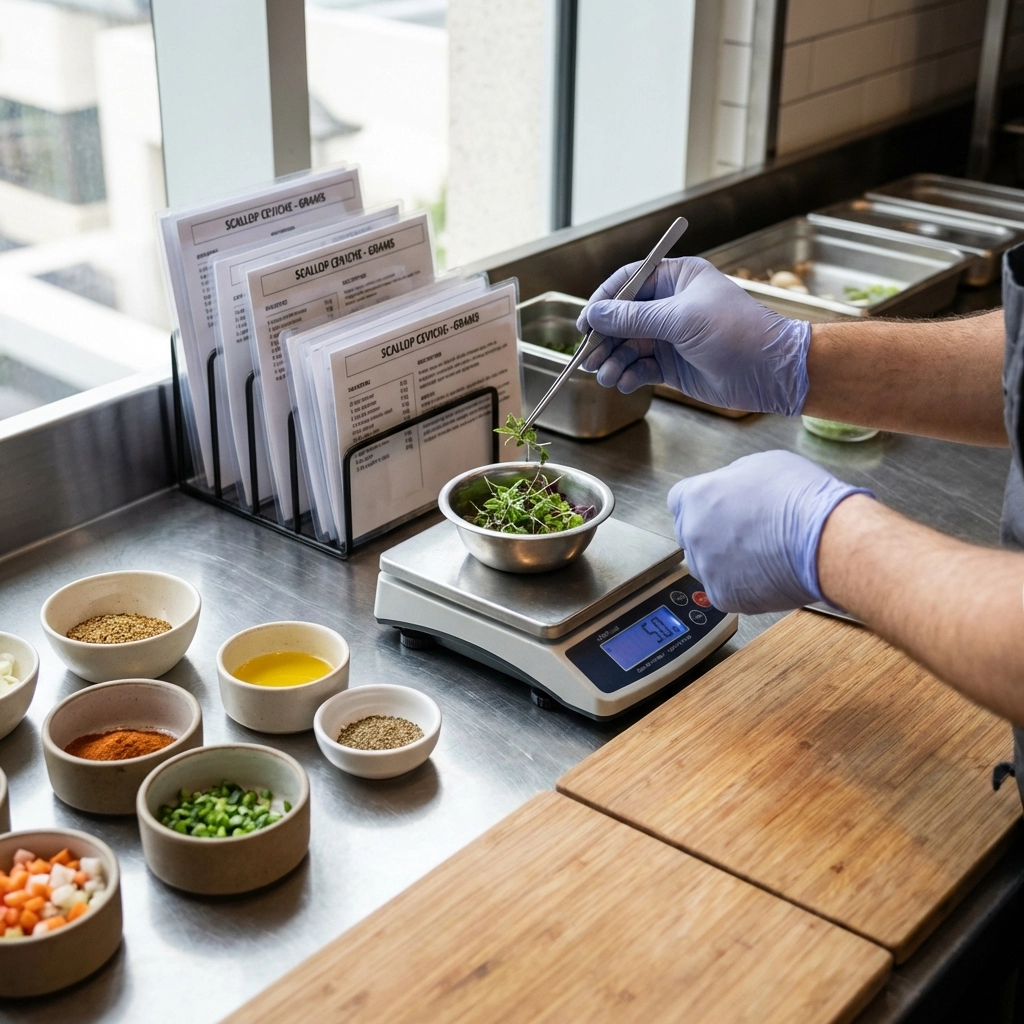
We believe that inconsistent portions represent one of the most preventable drains on restaurant profitability. When one cook uses a heavy hand with proteins while another measures precisely, your food costs become unpredictable.
The solution is standardized recipes that specify exact measurements for every ingredient in every dish.
Standardization accomplishes three critical goals:
- Prevents ingredient overuse by removing guesswork from prep and plating
- Maintains consistent quality across shifts, locations, and staff changes
- Enables precise cost calculations so you know exactly how profitable each menu item should be
The real power emerges when you compare theoretical food costs (what your recipes say you should use) against actual usage (what your inventory counts reveal). This variance analysis helps managers identify and correct inconsistencies before they significantly affect margins.
If you're struggling with menu profitability, our guide on menu design that drives profit explores how standardization connects to strategic pricing.
Pillar Three: Frequent Inventory Audits to Prevent Losses
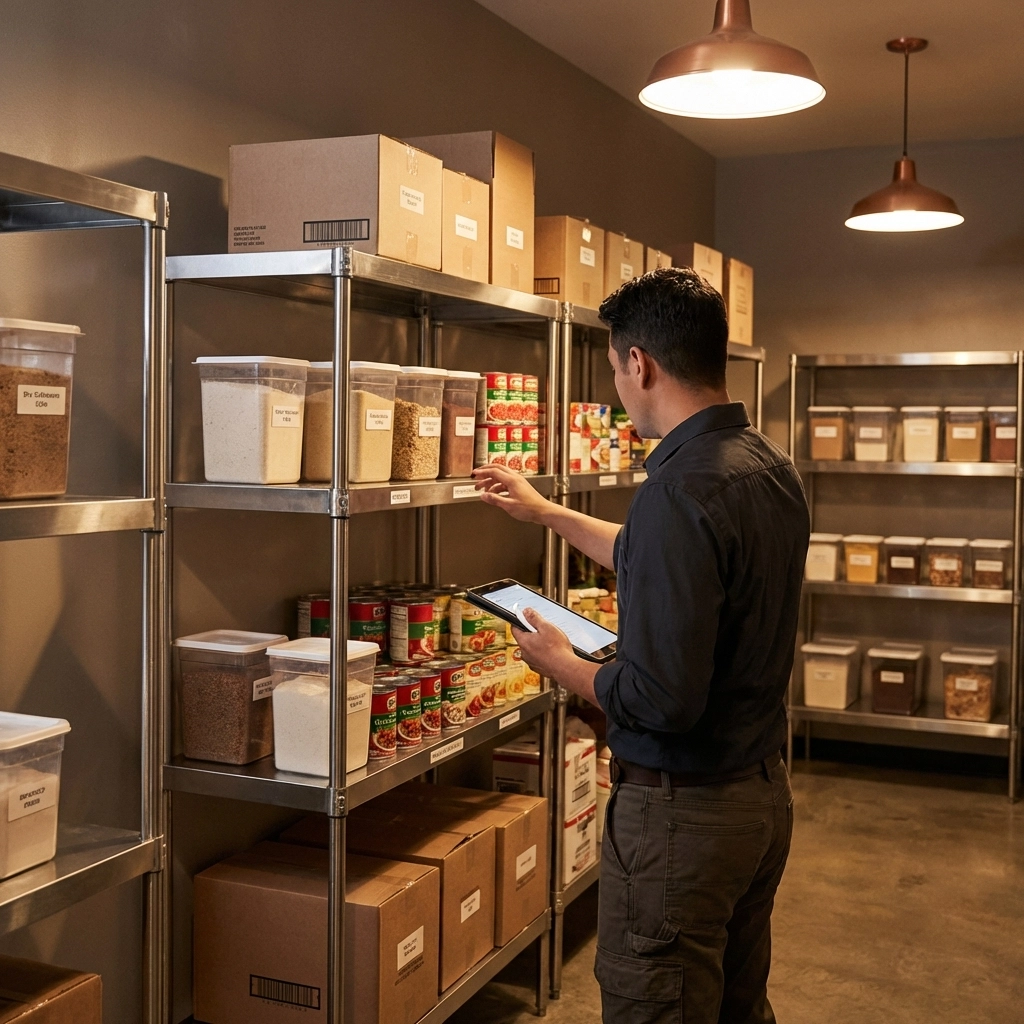
Physical counts remain essential even with sophisticated tracking software. Systems can glitch. Human error happens. Theft occurs. Regular audits catch discrepancies before small problems become major financial drains.
Best practices for effective auditing:
-
Conduct weekly cycle counts focusing on high-cost ingredients (proteins, seafood, premium spirits). These items have the biggest impact on your bottom line if counts are off.
-
Perform daily spot checks on your most-used items. A quick count of prep containers and walk-in stock takes minutes but catches issues immediately.
-
Rotate counting responsibilities among staff members. This builds accountability across your team and prevents any single person from consistently overlooking (or covering up) discrepancies.
-
Document everything. When variances appear, investigate promptly. Was it a receiving error? Waste that wasn't logged? Potential theft? You can't fix what you don't understand.
Pillar Four: Smart Ordering and Supplier Management
Data-driven purchasing decisions separate struggling restaurants from profitable ones. Your ordering practices should be guided by actual usage patterns: not gut feelings or habit.
Consider this example: If your usage data consistently shows demand for 200 pounds of chicken weekly, negotiating a bulk purchasing agreement could save 10-15% per unit. That savings compounds significantly over a year.
Strategies for smarter ordering:
-
Consolidate deliveries. Fewer delivery days means lower per-order costs and reduced receiving labor. Work with suppliers to establish consistent ordering cycles.
-
Build genuine supplier relationships. Reliable partners who understand your business enable better negotiation on pricing and more flexibility when you need it.
-
Track supplier performance. Are deliveries accurate and on time? Is product quality consistent? Document issues and address them directly: or find alternatives.
-
Review contracts quarterly. Market prices fluctuate. Make sure you're not locked into unfavorable terms when better options exist.
For establishments already tracking costs but not seeing results, our analysis of why restaurant cost analysis fails identifies common pitfalls.
Pillar Five: Demand Forecasting and Labor Optimization
The final pillar connects inventory management to broader operational efficiency. Using historical sales data to predict ingredient usage allows you to optimize prep work and staffing levels based on actual needs: not assumptions.
Key forecasting approaches:
-
Analyze sales by day, daypart, and season. Patterns exist in your data. Tuesday lunch service doesn't require the same prep as Saturday dinner.
-
Implement just-in-time inventory practices. Stock arriving only when needed minimizes carrying costs and reduces spoilage risk.
-
Align prep schedules with forecasted demand. Over-prepping is just as wasteful as over-ordering. Your prep sheets should reflect realistic projections.
-
Connect inventory insights to labor scheduling. Slower periods with minimal inventory turnover don't require full staffing. Use your data to schedule efficiently.
Supporting Systems That Make the Framework Work
The five pillars require technological support to function at scale. Here are the essential systems:
Inventory Management Software that integrates with your POS provides real-time visibility, automates reorder alerts, and sends notifications for expiring ingredients. The investment pays for itself in reduced waste and improved accuracy.
FIFO (First-In, First-Out) Organization ensures older inventory gets used before newer stock. This simple practice: placing older items in front during restocking: prevents spoilage from items getting lost in the back of the cooler.
ABC Inventory Categorization prioritizes your highest-value items for stricter control. "A" items (expensive, high-impact ingredients) warrant more frequent counts and tighter tracking than "C" items (inexpensive, stable goods).
Recipe Costing Systems that map recipes to menu items automatically track yield and portion costs, giving you accurate profitability data for every dish you serve.

Implementing the Framework in Your Operation
We believe that successful implementation happens through gradual, consistent effort rather than overnight transformation. Start with whichever pillar addresses your most pressing challenge. Build competency there before expanding to the next area.
Staff training matters enormously. The best systems fail when your team doesn't understand or buy into the processes. Involve key employees in implementation, explain the reasoning behind changes, and celebrate improvements as they occur.
Years of experience in hospitality have shown us that establishments implementing this framework systematically see measurable improvements in food cost percentages, reduced waste, and more accurate forecasting within the first quarter.
Ready to strengthen your inventory management practices? Contact our team to discuss how we can help your establishment implement these proven strategies for lasting cost control.
Contact (Nationwide):
- Email: ron@soderblomconsulting.com
- Website: https://www.soderblomconsulting.com