The marketing landscape has undergone seismic shifts in recent years, leading many restaurant owners to question whether traditional marketing strategies still hold value. We believe that dismissing traditional marketing entirely represents a critical oversight that could cost restaurants valuable customers and community connections.
The reality is more nuanced than the digital-first narrative suggests. While digital marketing offers unprecedented targeting capabilities and measurable results, traditional marketing strategies remain not only relevant but essential for restaurants seeking to build lasting relationships within their communities.
The Myth of "Dead" Traditional Marketing
Reports of traditional marketing's death have been greatly exaggerated. We believe that every establishment has the potential to benefit from a strategic combination of both traditional and digital approaches. The key lies in understanding when and how to deploy each method effectively.
Recent studies reveal that 82% of consumers trust print advertisements, while 80% place their confidence in television advertising. These numbers demonstrate that traditional media continues to carry significant credibility in the minds of consumers: a credibility that purely digital tactics struggle to replicate.
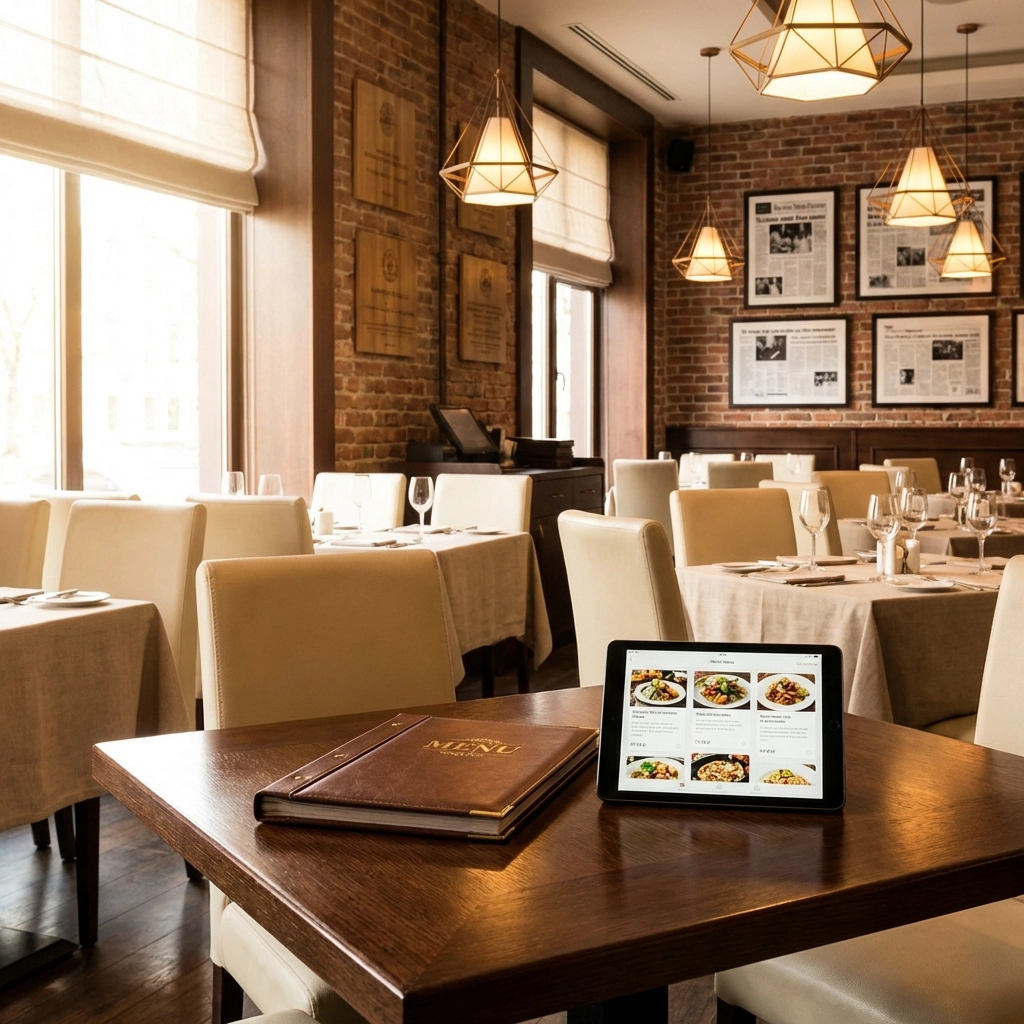
The restaurant industry, in particular, benefits from traditional marketing's ability to create tangible, memorable experiences. A well-designed direct mail piece featuring mouth-watering food photography can trigger immediate appetite responses that a social media ad might not achieve with the same consistency.
Demographics Determine Strategy
Understanding your customer base becomes crucial when evaluating marketing channels. We believe that successful restaurants recognize the demographic divide that influences media consumption patterns.
Consider these revealing statistics: only 18% of people aged 18-29 regularly watch local news, while 57% of those 65 and older do. If your restaurant attracts an older clientele or serves as a neighborhood staple, traditional channels like local television, radio, and print advertising provide direct access to your core audience.
Conversely, establishments targeting younger demographics might find greater success through digital channels. However, this doesn't mean abandoning traditional methods entirely: it means understanding how to weight your marketing mix appropriately.
The Power of Local Community Marketing
Local store marketing represents one of our core specializations, and we believe it demonstrates the irreplaceable value of traditional community engagement. Digital marketing, for all its sophistication, cannot replicate the trust and loyalty built through genuine community involvement.
Traditional local marketing strategies create multiple touchpoints that digital campaigns struggle to achieve:
Community Events and Sponsorships: Participating in local festivals, sponsoring youth sports teams, or hosting charity events creates positive associations that extend far beyond individual transactions.
Local Media Relationships: Building relationships with local newspapers, radio stations, and community newsletters generates coverage that carries editorial credibility: something paid digital advertising cannot purchase.
Word-of-Mouth Amplification: Traditional community presence creates natural conversation starters that amplify organically through neighborhood networks.

These connections form the foundation of what we call "community capital": an asset that provides resilience during challenging times and creates a customer base that actively promotes your establishment.
Integration Creates Competitive Advantage
The most successful restaurant marketing strategies in 2026 embrace integration rather than channel competition. We believe that orchestrated multichannel approaches leveraging dynamic customization deliver superior results compared to single-channel strategies.
Modern integration might look like this: A direct mail campaign featuring QR codes that link to exclusive digital offers, combining the tangible impact of print with the tracking capabilities of digital marketing. Or local radio sponsorship that drives traffic to social media contests, creating engagement across multiple touchpoints.
This hybrid approach allows restaurants to capture the broad reach and credibility of traditional methods while maintaining the precision targeting and real-time optimization capabilities of digital platforms.
Traditional Tactics That Still Deliver Results
Several traditional marketing strategies continue to demonstrate effectiveness for restaurant operations:
Direct Mail Campaigns: When triggered by customer behavior data: such as re-engaging past diners who haven't visited in 90 days: direct mail campaigns can achieve remarkable response rates. The physical nature of mail creates a sense of importance that email notifications often lack.
Local Print Advertising: Community newspapers and lifestyle magazines reach established local residents who dine out regularly and have disposable income. These publications often enjoy high engagement rates within specific geographic areas.
Radio Partnerships: Local radio stations maintain loyal listenership, particularly during commute hours when dining decisions are often made. Strategic partnerships can include live broadcasts from your location, creating buzz and immediate traffic.
Billboard and Outdoor Advertising: Strategic placement near your location or along routes frequented by your target demographic maintains top-of-mind awareness in a way that digital ads, which can be blocked or ignored, cannot achieve.

When Digital Marketing Falls Short
Digital marketing, despite its advantages, faces increasing challenges that traditional methods can address:
Ad Fatigue: Consumers encounter thousands of digital advertisements daily, leading to decreased attention and engagement rates.
Privacy Concerns: Increasing restrictions on data collection and targeting capabilities reduce digital marketing effectiveness.
Platform Dependency: Algorithm changes on social media platforms can instantly impact reach and engagement, making digital-only strategies vulnerable.
Trust Deficit: Fake reviews and manipulated metrics have decreased consumer trust in purely digital marketing claims.
Traditional marketing provides stability and credibility that helps restaurants build lasting relationships beyond the volatility of digital platforms.
Building Your Hybrid Marketing Approach
Creating an effective marketing strategy requires careful consideration of your specific situation, target audience, and community context. We believe that every establishment has the potential to benefit from a thoughtfully constructed marketing mix that leverages both traditional and digital channels.
Step 1: Assess Your Audience
Analyze your customer demographics, dining patterns, and community engagement preferences. This analysis informs channel selection and message development.
Step 2: Establish Local Presence
Invest in genuine community relationships through sponsorships, partnerships, and local media engagement. These relationships provide foundation credibility for all other marketing efforts.
Step 3: Create Integrated Campaigns
Design campaigns that use traditional methods to drive digital engagement and vice versa. This approach maximizes reach while providing multiple measurement touchpoints.
Step 4: Measure and Optimize
Track results across all channels, understanding that traditional marketing benefits may manifest differently than digital metrics but remain equally valuable for long-term success.

The Future of Restaurant Marketing
Looking ahead, successful restaurants will embrace marketing strategies that combine the authenticity and credibility of traditional methods with the precision and agility of digital approaches. This integration creates competitive advantages that single-channel strategies cannot achieve.
Community involvement, local partnerships, and traditional media relationships provide the foundation of trust upon which digital strategies can build more effectively. Rather than viewing traditional and digital marketing as competing approaches, forward-thinking restaurant owners recognize them as complementary tools in a comprehensive strategy.
The restaurants that thrive in the coming years will be those that maintain strong community connections while leveraging technology to enhance and amplify those relationships. Traditional marketing strategies provide the credibility and local presence that digital marketing alone cannot replicate, making them not just relevant but essential for sustained restaurant success.
For restaurant owners questioning their marketing approach, the answer isn't choosing between traditional and digital: it's understanding how to integrate both methods effectively to create lasting customer relationships and community presence that drives long-term profitability.