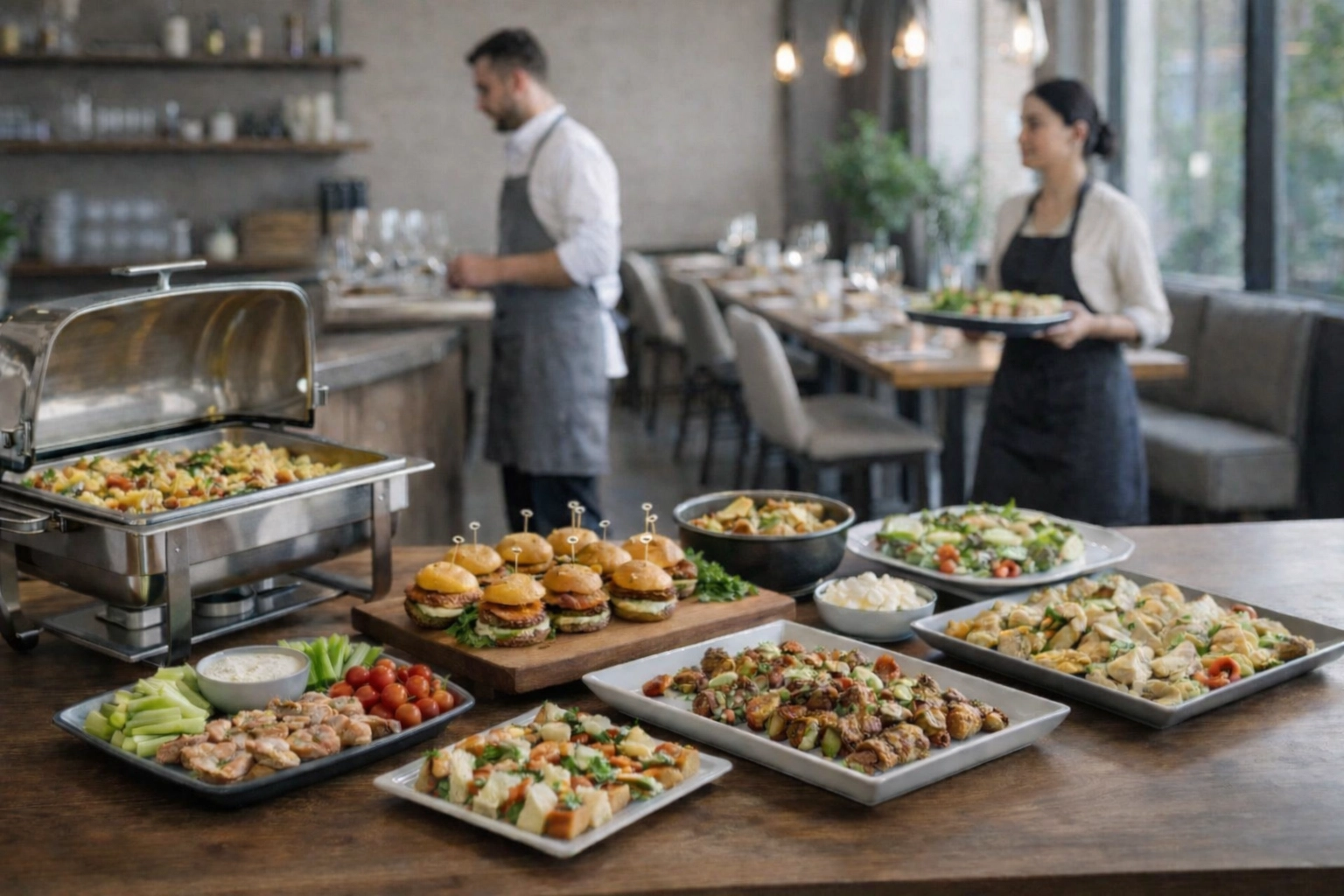
We believe that every restaurant and hospitality establishment has untapped revenue potential sitting right under their nose. The path to significant growth in 2026 doesn't require doubling your square footage, hiring an entirely new team, or betting on a risky expansion. The smartest operators are discovering that strategic catering operations can add 15–30% to their top line by leveraging existing kitchen capacity, staff expertise, and brand equity.
The catering landscape has fundamentally shifted. Gone are the days when catering meant scrambling to fulfill random wedding orders or hoping for the occasional corporate holiday party. The modern catering opportunity centers on predictability, repeatability, and direct customer relationships that build sustainable revenue streams.
The Shift to Recurring Corporate Revenue
The dominant trend we're seeing across successful hospitality operators is a strategic pivot from volatile event catering toward repeatable corporate contracts. These aren't one-off occasions: they're weekly team lunches, monthly all-hands meetings, standing executive orders, and recurring drop-off packages that create predictable cash flow.
This shift matters because recurring revenue transforms your financial planning. Instead of feast-or-famine quarterly spikes, you're building a foundation of dependable orders that allow for better inventory management, staffing predictability, and margin optimization. The lifetime value of a corporate client placing weekly orders dwarfs that of a single catered event, no matter how impressive that event might be.
We recommend implementing a customer relationship management system specifically tailored to track corporate reorder patterns, decision makers, and preferences. Understanding which businesses order what items, when they typically place orders, and who the key stakeholders are creates competitive advantages that marketplace platforms cannot replicate. This intelligence allows you to anticipate needs, suggest menu rotations, and maintain relationships that keep competitors at bay.
Eliminating the Marketplace Commission Drain
Third-party catering marketplaces serve a purpose: they provide discovery and initial exposure. However, relying on them as your primary channel means surrendering 15–30% of every order to platform fees. That's not a sustainable growth strategy.
The path forward involves strategically shifting customers from marketplace platforms to your direct ordering channels. This transition requires intentional effort but delivers immediate margin improvement. Consider adjusting your marketplace pricing slightly higher to account for commission costs, positioning your direct ordering option as the value choice for savvy customers.
Every marketplace order represents an opportunity. Following up with a personalized thank-you message that introduces your direct ordering system turns one-time platform users into direct customers. Including a well-designed flyer in every marketplace delivery: featuring your direct ordering website, phone number, and perhaps a first-order incentive: creates a bridge from their platform to yours.
Your Google Business Profile deserves particular attention. Adding "Catering" as a secondary service category, linking your "Order" button directly to a dedicated catering landing page, and regularly posting high-quality photos of your catering setups ensures you appear in local searches when corporate decision makers look for solutions.
Menu Engineering for Margin Expansion
We believe that menu design represents one of the most underutilized profit levers in catering operations. A 3% reduction in food costs on $1.5 million in annual catering revenue equals $45,000: real money that flows directly to your bottom line without requiring a single additional order.
Building "profit anchors" into your catering menu: high-volume, low-variance items that travel well, hold temperature effectively, and use ingredients with minimal waste: creates the foundation for sustainable margins. These aren't necessarily your most exciting dishes, but they're the workhorses that allow you to offer premium items while maintaining overall profitability.
Reducing ingredient sprawl across your catering menu pays dividends in multiple ways. Fewer unique ingredients mean better purchasing power, less inventory complexity, reduced waste, and faster prep times. When your catering menu shares strategic ingredient overlap with your dine-in menu, you're maximizing efficiency across your entire operation.
Standardized portions matter more in catering than in any other segment. Creating clear specifications: portion sizes, packaging standards, presentation guidelines: ensures consistency regardless of which team member handles preparation. This consistency protects your brand reputation and eliminates the margin erosion that comes from over-portioning or inconsistent execution.
Strategic Visibility and Proactive Sales
Making catering visible to your existing customer base requires intentional effort across every touchpoint. QR-coded catering posters positioned at your point-of-sale catch diners during positive brand experiences. Including catering menu inserts in every takeout order plants seeds with customers who already trust your food quality.
Your dedicated catering landing page should be optimized for search queries that corporate decision makers actually use: "office lunch delivery near me," "corporate catering [your city]," "team meeting food options." This page needs clear pricing guidance, sample menus, easy ordering mechanisms, and social proof in the form of testimonials or corporate logos if appropriate.
Proactive corporate outreach separates growing catering operations from stagnant ones. Marketplace orders capture people already searching for solutions. Proactive outreach reaches businesses that don't yet realize they need you: or who haven't considered switching from their current provider. The fourth quarter presents particular opportunities around employee appreciation events, year-end celebrations, and setting up recurring contracts for the new year.
Operational Excellence as Competitive Advantage
We believe that catering success ultimately comes down to operational consistency. Designating a specific team member as your "Catering Captain": someone who obsesses over on-time delivery, proper presentation, and relationship management: transforms catering from a side hustle into a legitimate profit center.
This person becomes the face of your catering operation, building relationships with corporate clients, troubleshooting issues before they become problems, and gathering feedback that improves your offering. Having a dedicated point of contact creates accountability and professionalism that corporate clients value and remember.
Per-person bundling simplifies ordering decisions for corporate clients while protecting your margins. Instead of offering individual items that clients must calculate and combine, creating preset packages: "Executive Lunch Package: $16 per person," "Team Meeting Breakfast: $12 per person": streamlines the buying process and ensures proper portioning.
Premium packaging signals quality and justifies pricing. Upgrading from basic disposables to branded, eco-friendly, or elevated packaging options creates perceived value that supports margin. Corporate clients ordering for important meetings, client presentations, or executive gatherings willingly pay premiums when presentation matches the occasion.
Planning inventory and staffing around seasonal patterns rather than treating catering as unpredictable allows for better resource allocation. Analyzing your catering data reveals patterns: perhaps Tuesdays and Thursdays generate 60% of corporate orders, or summer months see a 40% dip in demand. Understanding these rhythms lets you staff appropriately and manage ingredient purchases effectively.
The Path Forward
The fastest way to add substantial revenue in 2026 doesn't require construction permits, lease negotiations, or massive capital outlays. It requires strategic focus on an opportunity that already exists within your operation. By shifting toward recurring corporate relationships, eliminating marketplace dependency, optimizing menu margins, increasing visibility, and building operational excellence, hospitality operators are creating new revenue streams that leverage existing assets.
This approach works because it uses your current kitchen capacity during traditionally slower periods, leverages your existing brand equity and food quality reputation, and builds on staff expertise you've already developed. The investment is primarily in systems, processes, and focused attention rather than physical expansion.
Every establishment has the potential to capture this opportunity. The operators who execute these strategies with discipline and consistency are positioning themselves for sustainable growth that doesn't depend on economic tailwinds or hoping for more foot traffic.
If you're ready to explore how strategic catering operations could transform your revenue picture, we're here to help. Our team specializes in creating tailored operational strategies that not only attract new revenue streams but retain and optimize them over time.