You've asked yourself this question before. Maybe it was during a particularly brutal month when labor costs spiraled out of control. Perhaps it was after watching yet another competitor open down the street with a concept that looked suspiciously similar to yours. Or it could have been at 2 AM, staring at spreadsheets that refused to make sense.
Do I actually need a hospitality consultant, or can I figure this out on my own?
We believe this is one of the most important questions a restaurant or bar owner can ask: and the honest answer isn't a simple yes or no. It depends on where you are, what you're facing, and whether you have the internal resources to solve complex problems without sacrificing your sanity (or your profit margins).
Let's break it down.
The Reality of Running a Hospitality Business in 2026
The hospitality industry has always been demanding. But today's landscape presents challenges that previous generations of owners never had to navigate.
Rising labor costs. Supply chain volatility. Shifting consumer expectations around sustainability and experience. The relentless pace of technology adoption. And let's not forget: margins that seem to shrink every quarter despite your best efforts.
Here's a sobering statistic: businesses with a strong strategic plan grow 30% faster than those without one. Yet most independent restaurant and bar owners are so consumed with daily operations that strategic planning becomes an afterthought.
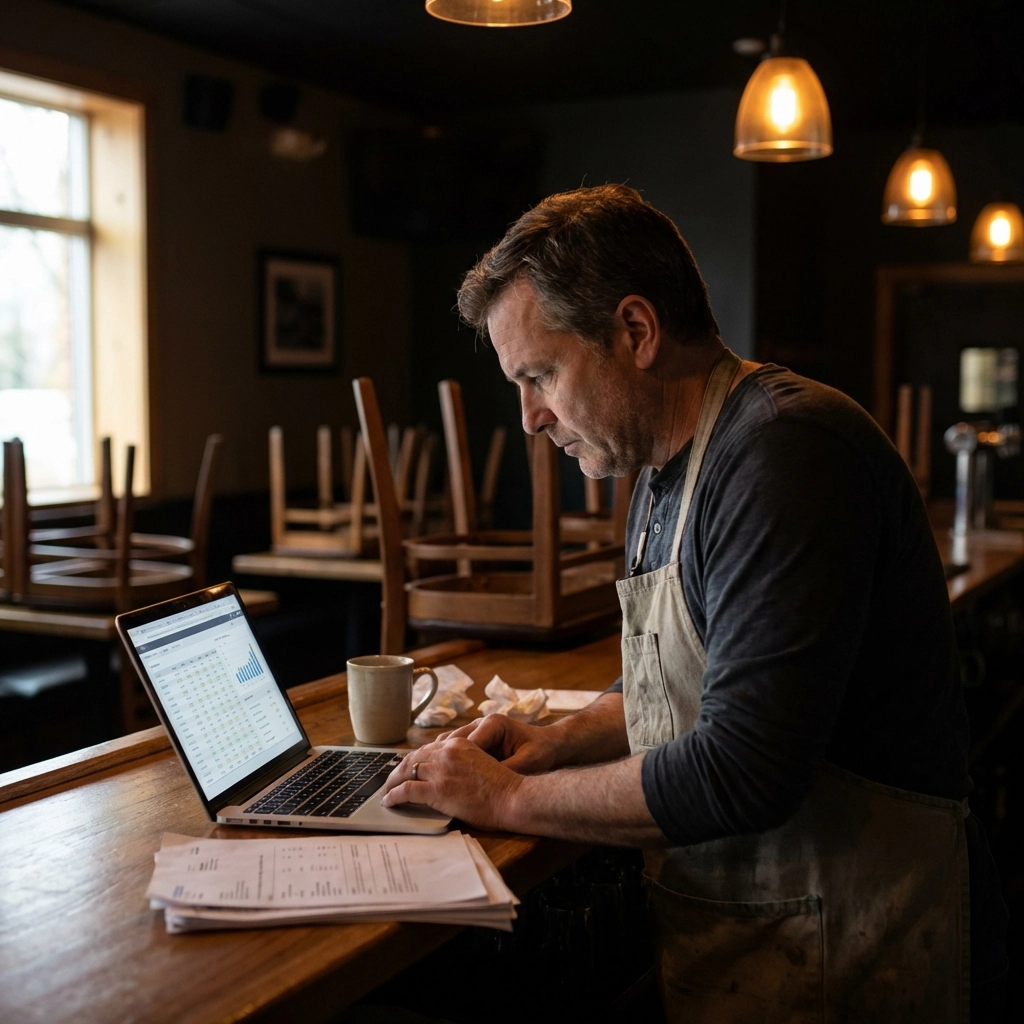
This isn't a criticism. It's reality. When you're putting out fires every single day, it's nearly impossible to step back and see the bigger picture.
And that's precisely where hospitality consulting enters the conversation.
Signs Your Business Might Benefit from Expert Help
We believe that every establishment has the potential to thrive: but recognizing when you've hit a wall is crucial. Here are some red flags that suggest outside expertise could make a meaningful difference:
Your Numbers Don't Add Up
You're busy. Tables are full. The bar is packed on weekends. But somehow, at the end of the month, the bank account tells a different story. This disconnect between perceived success and actual profitability is one of the most common issues we see. Enhanced operational efficiency improvements can increase profit margins by as much as 20%: but you have to know where the leaks are before you can plug them.
Staff Turnover Is Killing You
You've hired and trained the same position three times this year. Each cycle costs you time, money, and momentum. A seasoned restaurant consulting professional can help you build systems that not only attract talent but retain it: transforming your team into a stable, motivated workforce.
You're Stuck in Reactive Mode
Every day feels like damage control. You're responding to problems instead of preventing them. Growth initiatives keep getting pushed to "next quarter." If this sounds familiar, you're not alone: but staying in this pattern will eventually catch up with you.
Competition Is Eating Your Lunch
A new concept opened nearby with better branding, tighter operations, and a social media presence that makes yours look outdated. The hospitality industry is extremely competitive, and expert guidance can provide a significant edge over rivals in attracting and retaining customers.
You're Planning Something Big
Opening a second location. Launching a new concept. Overhauling your menu or bar program. These pivotal moments carry significant risk: and the cost of getting them wrong far exceeds the investment in getting them right.
What a Hospitality Consultant Actually Does
There's a misconception that consultants swoop in, tell you everything you're doing wrong, hand you a generic playbook, and disappear. That's not how effective hospitality consulting works.
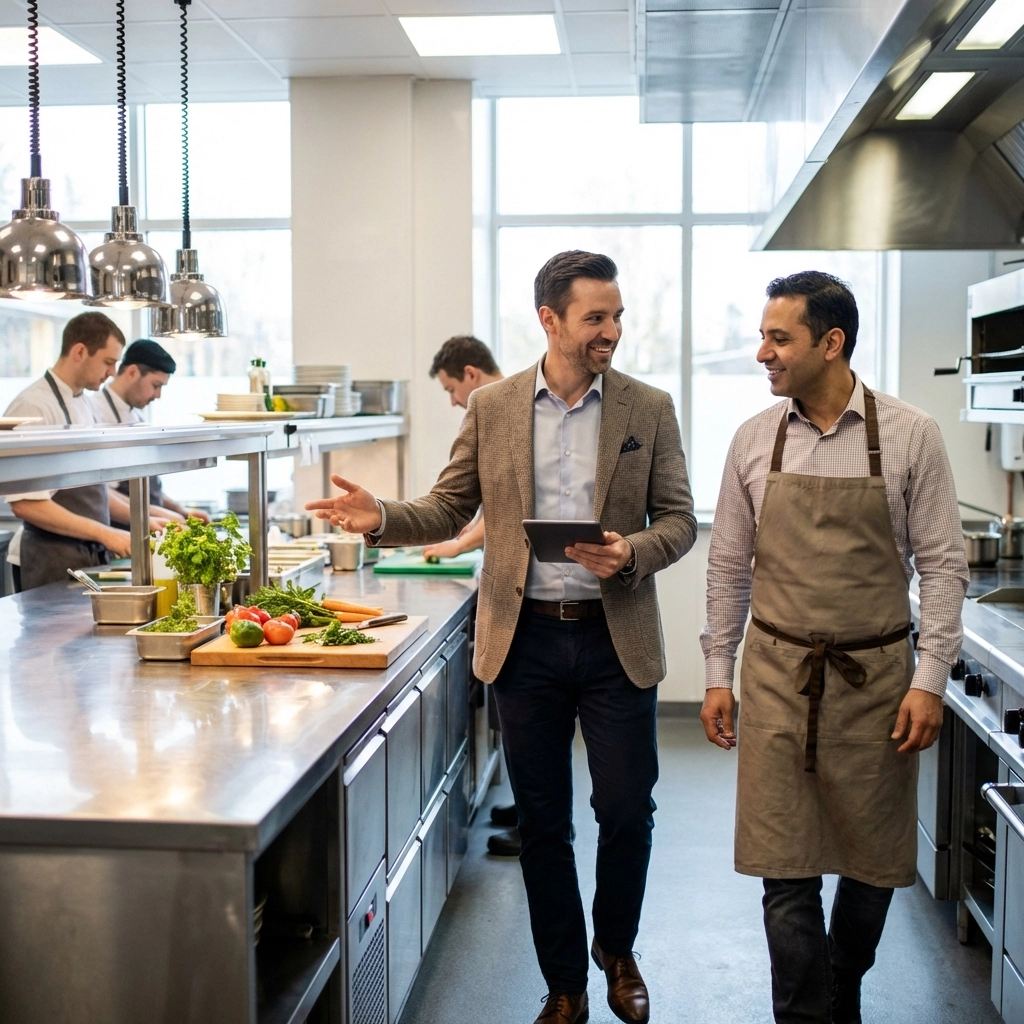
We believe in creating environments where lasting change takes root. That means rolling up our sleeves and understanding your specific operation: your market, your team, your constraints, and your goals.
Here's what comprehensive restaurant and bar consulting typically involves:
Operational Assessment: A deep dive into your current processes, from kitchen flow to front-of-house service to inventory management. The goal is identifying inefficiencies that are costing you money without you even realizing it.
Financial Analysis: Beyond basic P&L review, this includes understanding your true food and beverage costs, labor ratios, and where your margins are strongest (and weakest).
Menu Engineering: Strategic design that balances guest preferences with profitability. It's not just about what tastes good: it's about what sells and what makes money.
Team Development: Building training systems, leadership pipelines, and accountability structures that reduce turnover and improve performance.
Strategic Planning: Creating a roadmap for growth that accounts for market conditions, competitive positioning, and realistic timelines.
Technology Integration: Identifying tools and systems that streamline operations without overwhelming your team.
The best consultants bring specialized knowledge across multiple hospitality domains: culinary arts, customer service, marketing, and operations: enabling you to make informed decisions that drive lasting change.
The ROI Question: Is It Worth the Investment?
Let's address the elephant in the room. Consultants cost money. And when margins are already tight, it's natural to question whether that investment will pay off.
Here's what the data tells us:
- Hotels and restaurants working with consultants can achieve a 15% reduction in operational costs
- Properties with exemplary guest experiences see a 25% increase in bookings due to positive word-of-mouth
- Businesses with strong strategic plans grow 30% faster than those without
But beyond the statistics, consider the cost of not seeking help.
The hospitality industry has a notoriously high failure rate, often due to preventable mistakes: problems that professional consultants can identify and address before they become catastrophic. Consultants also bring time efficiency, fast-tracking processes that might otherwise take months (or years) through trial and error.
Think about it this way: if a $15,000 consulting engagement helps you avoid a $50,000 mistake or identifies $30,000 in annual savings, the math speaks for itself.
When to DIY vs. When to Call in the Pros
We believe in honesty, even when it doesn't directly benefit us. The truth is, not every situation requires a consultant.
You can probably handle it yourself if:
- You have strong internal leadership with relevant industry experience
- The problem is isolated and straightforward (a single underperforming menu item, for example)
- You have the time and bandwidth to research, implement, and monitor solutions
- Your business is fundamentally healthy and you're looking for minor optimizations
You should seriously consider expert help if:
- You've tried to solve the problem internally and it persists
- The issue is systemic (affecting multiple areas of your operation)
- You're facing a major transition: opening, expansion, acquisition, or turnaround
- You lack the specialized knowledge needed (bar program development, for instance, if your background is in the kitchen)
- The stakes are high and the margin for error is low
The food and beverage sector's high failure rate often stems from preventable mistakes. A consultant's value isn't just in solving today's problem: it's in helping you build systems that prevent tomorrow's.
Making the Decision
Ultimately, the choice to engage a hospitality consultant comes down to a simple question: Do you have the internal expertise to address your challenges independently, or would external perspective and specialized knowledge justify the investment?
We believe that seeking help isn't a sign of weakness: it's a sign of smart leadership. The most successful operators we've worked with share a common trait: they know what they don't know, and they're willing to bring in experts to fill those gaps.
If you're on the fence, start with a conversation. A reputable restaurant consulting firm will be honest about whether their services make sense for your situation. If they're pushing hard to close a deal before understanding your business, that's a red flag.
The right consultant will ask questions before offering answers. They'll want to understand your goals, your constraints, and your vision. And they'll be upfront about what they can: and can't: help you achieve.
Ready to explore whether consulting makes sense for your restaurant or bar? We're here to have an honest conversation about your challenges and whether Soderblom Consulting is the right fit.