We believe that technology should work for your restaurant, not against it. Yet we've walked into countless establishments where the owners are drowning in software subscriptions, juggling five different logins, and spending more time on data entry than actually running their business.
Here's the uncomfortable truth: your restaurant software stack might be one of the biggest drains on your efficiency. But it's probably not for the reason you think.
The issue isn't that you have too much technology. The issue is that your technology isn't talking to itself.
The Real Problem: Fragmentation, Not Technology
Let's be clear about something upfront. Restaurant software, when properly integrated, delivers measurable results. We're talking about reducing food waste by up to 20%, cutting labor costs by 15-25%, and improving service speed by 25%. Restaurants that strategically adopt integrated technologies report overall performance improvements of 20-25% within the first year.
So no, software isn't the enemy. Disconnected software is.
Think about your current setup. You've probably got a POS system from one vendor, inventory management from another, scheduling software from a third, and maybe a reservation platform thrown in for good measure. Each one promised to solve a specific problem. Each one required its own training, its own subscription, and its own daily attention.

Now think about how these systems interact. If your POS doesn't automatically update your inventory counts, someone has to do that manually. If your scheduling software doesn't know your actual sales data, you're guessing at labor needs. If your reservation system doesn't sync with your table management, your hosts are playing a frustrating game of telephone.
Every manual workaround is a crack in your efficiency. And those cracks add up fast.
Five Signs Your Software Stack Is Working Against You
We've identified several red flags that indicate a fragmented tech environment is dragging down your operation:
1. Your Managers Spend Hours on Data Entry
If your team is manually transferring numbers between systems: entering sales into spreadsheets, updating inventory counts by hand, or re-keying employee hours: you've got a problem. Integrated systems can reduce redundant data entry by up to 90%. That's not a small optimization. That's giving your managers their evenings back.
2. You Can't Get a Clear Picture Without Pulling Multiple Reports
When understanding your actual food cost requires opening three different programs and a calculator, something is broken. Real-time data visibility through connected dashboards should show you labor costs, food waste, and slow-moving inventory at a glance. If you're spending your Monday mornings piecing together last week's performance like a detective, your stack is failing you.
3. Order Errors Keep Happening
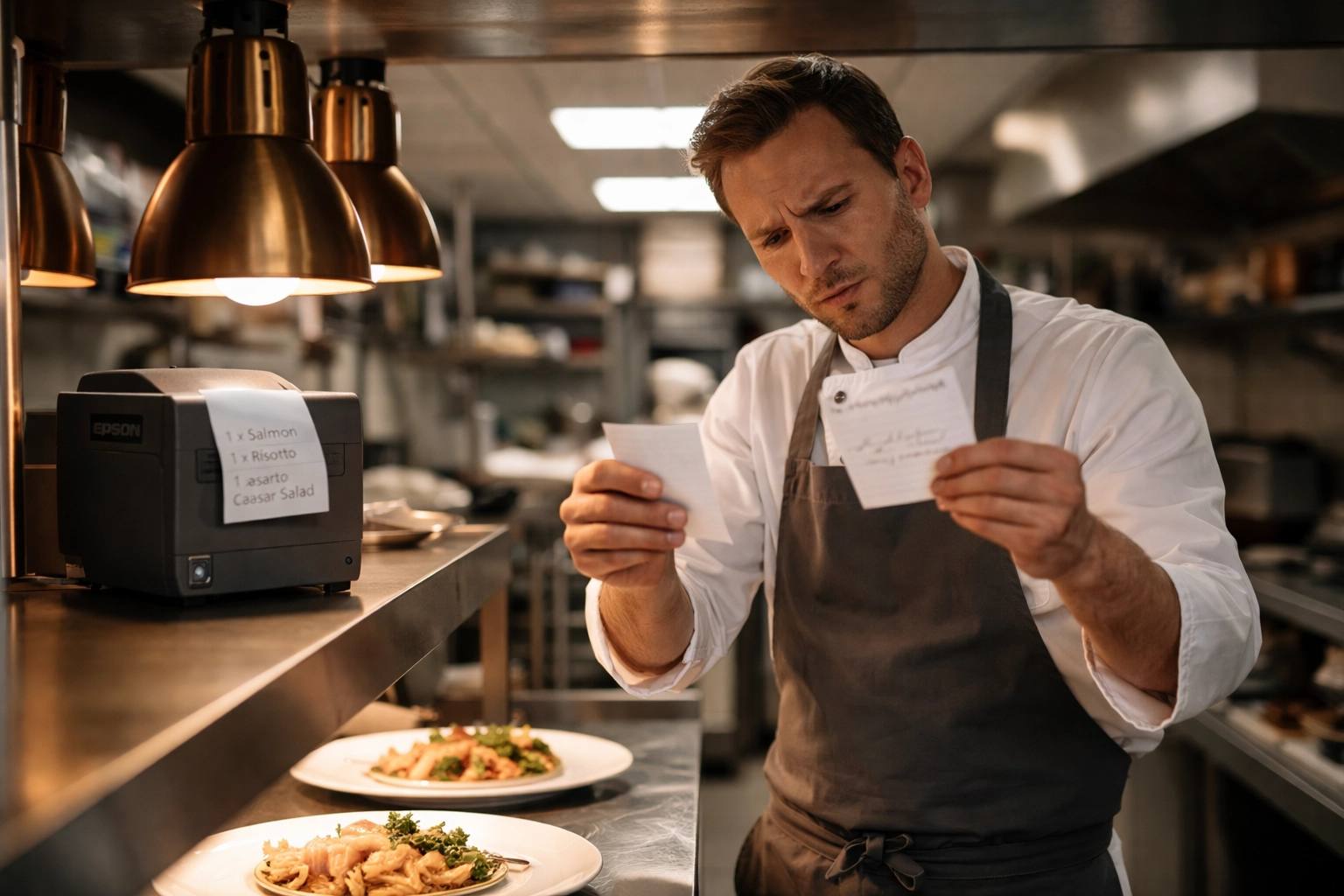
Disconnected systems mean more opportunities for human error. When a server enters an order into the POS, that information should flow seamlessly to the kitchen, to inventory, and to your financial reporting. Every time data has to be re-entered or interpreted by a human, there's a chance for mistakes. Integrated ordering systems have been shown to cut order errors by 20%.
4. You're Paying for Features You Don't Use
Most restaurant owners we work with are paying for overlapping capabilities across multiple platforms. Your POS might have basic inventory features you're not using because you bought a separate inventory system. Your scheduling software might have reporting tools that duplicate what your accountant already does. A streamlined, integrated stack eliminates this redundancy.
5. Training New Staff Takes Forever
If onboarding a new employee means teaching them six different systems with six different interfaces, you're burning time and money. Every additional platform increases training time, extends the period before new hires become productive, and raises the risk of costly mistakes during the learning curve.
What an Efficient Software Stack Actually Looks Like
We believe every establishment has the potential to run a lean, connected technology environment. Here's what that looks like in practice:
A unified POS at the center. Your point-of-sale system should be the hub that connects everything else. Sales data should automatically inform inventory deductions, labor scheduling recommendations, and financial reporting.
Integrated inventory management. When a burger sells, the beef, bun, and toppings should deduct from your counts without anyone lifting a finger. Your system should flag when you're running low, predict ordering needs based on sales trends, and track waste automatically.
Connected scheduling and labor management. Your scheduling software should pull from actual sales data to recommend staffing levels. It should integrate with payroll to eliminate double-entry. AI-driven scheduling can reduce administrative overhead by 10% while improving table turnover.
Seamless reservation and table management. When a guest books online, that information should flow directly into your floor plan. Wait times should update in real time. Your hosts should never be surprised by a reservation they didn't know about.
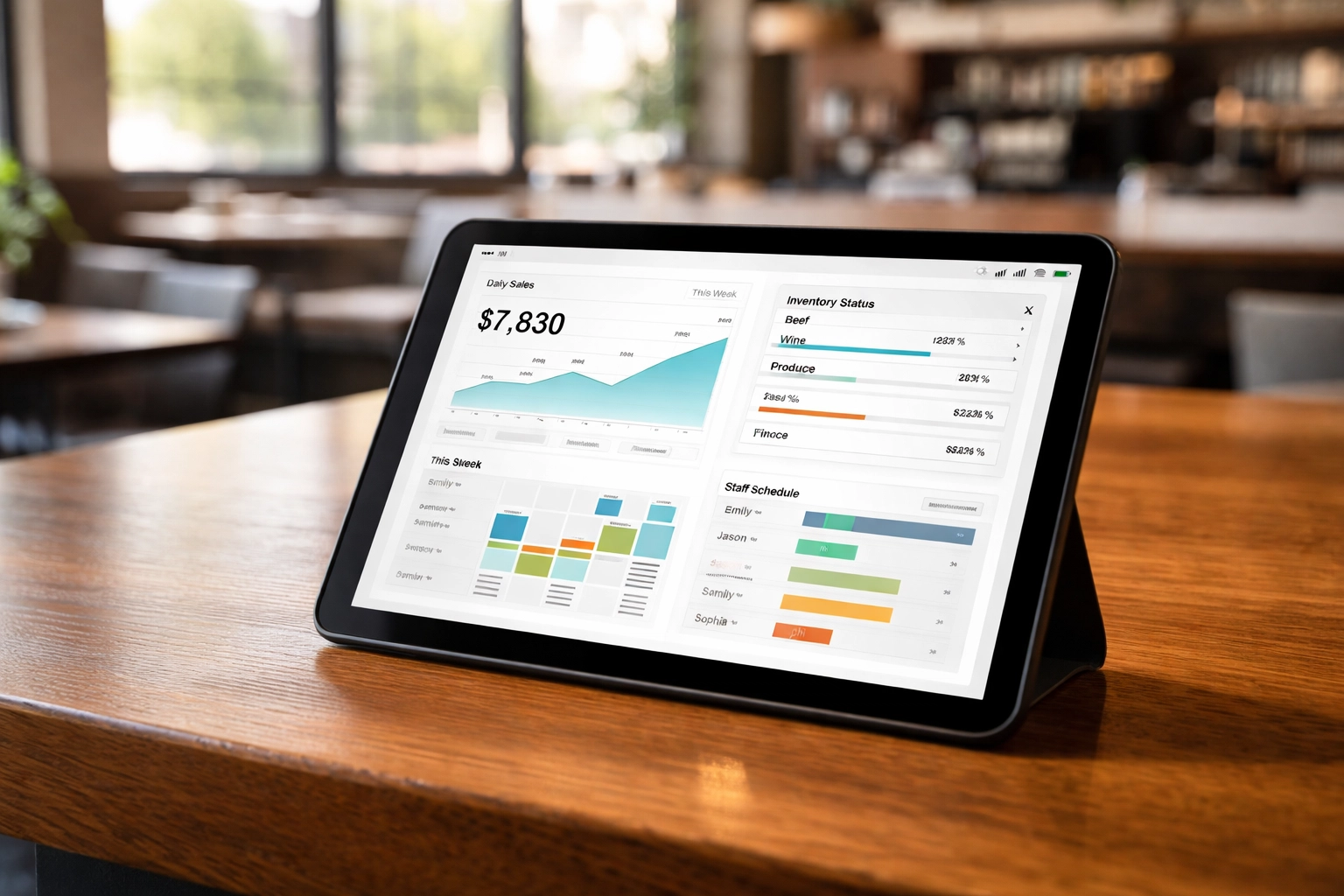
Automated reporting and analytics. At the end of each day, week, and month, your key metrics should compile themselves. You should be reviewing insights, not building spreadsheets.
Chili's achieved a 12% revenue increase by adopting integrated digital ordering and POS systems. Restaurants using properly integrated platforms have reported labor cost decreases of 25%. These aren't theoretical benefits: they're documented results from real operations.
How to Audit Your Current Stack
Before you can fix the problem, you need to understand it. Here's a straightforward process we recommend:
Map your current systems. List every piece of software you're currently paying for. Include the POS, inventory, scheduling, reservations, accounting, payroll, and any other tools your team uses daily.
Identify the handoffs. For each system, document where data comes from and where it goes. Look specifically for manual transfers: places where a human has to move information from one system to another.
Calculate the time cost. Estimate how many hours per week your team spends on manual data entry, report compilation, and system reconciliation. Be honest. This number is usually higher than owners expect.
Evaluate integration options. Many modern restaurant platforms offer native integrations or API connections. Before adding new software, ask whether it connects directly to your existing POS. Before keeping old software, ask whether a replacement would integrate better.
Consider a unified platform. In some cases, the best solution is to consolidate onto a single platform that handles multiple functions natively. The short-term pain of migration often pays for itself quickly in reduced complexity and improved efficiency.
If you're unsure where to start, working with a hospitality consultant can help you identify the highest-impact changes without the trial and error.
The Bottom Line
Your restaurant software stack isn't inherently good or bad for your efficiency. What matters is how those tools work together.
We believe that fragmented technology creates fragmented operations. When your systems don't communicate, your team fills the gaps with manual labor, your data becomes unreliable, and your decision-making suffers.
But when your technology is properly integrated, the benefits compound. Automation eliminates human error. Real-time visibility enables proactive management. Connected systems reduce redundant work. Your team focuses on hospitality instead of data entry.
The question isn't whether to use restaurant technology. The question is whether your technology is actually serving your business: or whether it's quietly stealing hours from your week while you pay for the privilege.
Take a hard look at your current stack. Map the handoffs. Calculate the time cost. We're confident you'll find opportunities to streamline, integrate, and reclaim efficiency you didn't know you were losing.
If you're ready to dig deeper into operational efficiency and technology integration, our guide on how to integrate AI with your restaurant operations offers practical next steps. And if your technology troubles are symptomatic of broader operational challenges, a comprehensive cost analysis might reveal even more opportunities for improvement.
Your software should make running a restaurant easier. If it's not, it's time to make some changes.